Saturday, May 17, 2014

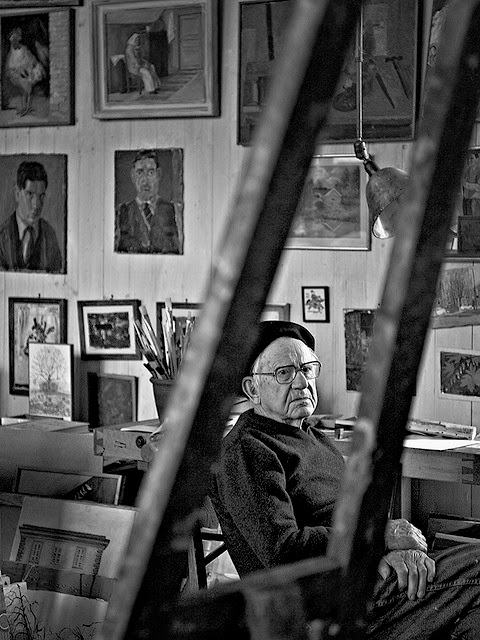
Paris M. Herouni

Paris M. Herouni (1933 – 2008) was an Armenian professor and scientist, member of National Academy of Sciences of the Republic of Armenia in the fields of radio-physics, radio-engineering, and radio-astronomy.
Among his many experiments is his first Radio-Optical Telescope (ROT-54/2.6) – the “Herouni Mirror Radio telescope” – the large antenna of which with a diameter 54 m has one of the best parameters among all Large Antennas in the world.
In more recent times Dr. Herouni has begun to take an interest in megalithic structures, such as Zorats Karer in Armenia, which is thought to be an ancient observatory. By using four telescopic methods, and the precession laws of Earth, he claims to have proven that Zorats Kaher is more than 7500 years old; dating it to around 5500 BC. After his initial research and calculations, Herouni, in 1999, got in touch with Professor Gerald Hawkins, author of Stonehenge Decoded. 
Hawkins responded to Herouni in a letter, in which he said "I admire the precise calculations you have made. I am most impressed with the careful work you have done, and hope that the result will ultimately get recorded in literature." Dr. Herouni wrote about his claims in his 2004 book, Armenians and Old Armenia.

Ancient Armenian Sun Moon and Star dial Reconstructed by academician Paris Herouni.

Friday, May 16, 2014

The Basque People = Documentary by Orson Welles

"Pays Basque" (The Basque Countries), first broadcast 7 October 1955. Beautiful documentary with some excellent berets!

Thursday, May 15, 2014

Camaradas (Comrades)

On the night of September 7th, 1950 the police take to the streets of several cities in France. Four hundred people, who just a few years earlier had fought and bled until death to rid the world of Fascism, are arrested and deported from France. The subtle hand of the United States was behind this operation.
That violation of basic human rights remains unresolved because the last of those comrades is still deported and forgotten in the same place where in a hostile way, democracy placed him and for what he fought in World War II.
Camaradas, or Comrades, is a Basque documentary on this event (showing many berets in the process). 

Wednesday, May 14, 2014

The (Real) Girl in the Blue Beret

Inspired by the wartime experiences of her late father-in-law, award-winning author Bobbie Ann Mason wrote ‘The Girl in theBlue Beret’, a novel about an American World War II pilot shot down in Occupied Europe.
Barney Rawlings disguised as a French workman in a 1944 photo taken for a false ID card
When Marshall Stone returns to his crash site decades later, he finds himself drawn back in time to the brave people who helped him escape from the Nazis. He especially recalls one intrepid girl guide who risked her life to help him—the girl in the blue beret.
Bobby Ann Mason
At twenty-three, Marshall Stone was a U.S. flyboy stationed in England. Headstrong and cocksure, he had nine exhilarating bombing raids under his belt when enemy fighters forced his B-17 to crash-land in a Belgian field near the border of France. The memories of what happened next—the frantic moments right after the fiery crash, the guilt of leaving his wounded crewmates and fleeing into the woods to escape German troops, the terror of being alone in a foreign country—all come rushing back when Marshall sets foot on that Belgian field again.
Michèle Moët-Agniel
Marshall was saved only by the kindness of ordinary citizens who, as part of the Resistance, moved downed Allied airmen through clandestine, often outrageous routes (over the Pyrenees to Spain) to get them back to their bases in England. Even though Marshall shared a close bond with several of the Resistance members who risked their lives for him, after the war he did not look back. But now he wants to find them again—to thank them and renew their ties. Most of all, Marshall wants to find the courageous woman who guided him through Paris. She was a mere teenager at the time, one link in the underground line to freedom.
Marshall’s search becomes a wrenching odyssey of discovery that threatens to break his heart—and also sets him on a new course for the rest of his life. In his journey, he finds astonishing revelations about the people he knew during the war—none more electrifying and inspiring than the story of the girl in the blue beret.

Tuesday, May 13, 2014

Antanas Sutkus

Antanas Sutkus (1939) is a renowned Lithuanian photographer and recipient of the Lithuanian National Prize and Order of the Lithuanian Grand Duke Gediminas.
Sutkus's series People of Lithuania is considered one of his most important works. It is a continuing project begun in 1976 to document the changing life and people of Lithuania. Working at the time when Lithuania (as the Lithuanian SSR) was part of the Soviet Union, Sutkus focused on black and white portraits of ordinary people in their everyday life rather than the model citizens and workers promoted by Soviet propaganda.

Sutkus had an opportunity to spend time with Jean-Paul Sartre and Simone de Beauvoir in 1965 when they visited Lithuania.

Monday, May 12, 2014

Vacas (Cows)

Many, many berets (boinas*/txapelas*) in Vacas. 
Vacas (Cows) is a 1992 Spanish film, written and directed by Julio Médem. An eerie family saga set in the rural Basque Country, the cryptic film follows the intertwined story of three generations of two families from 1875 to 1936. It was Médem's first film and for it he won the 1993 Goya Award as Best New Director.
The years 1875-1936 were the unstable and bloody years from the Third Carlist War to the Spanish Civil War. To help the non-Spanish viewer understand the history depicted in the film: the Basques allied themselves initially with the Carlists (who were right-wing) but later with the Spanish Republic (who were left-wing) because, in each case, they were promised local autonomy.
The structure of Vacas is made up of concentric circles: European Style—Spanish History—Basque culture—A village—Two houses of that village and, overseeing them all, the cows. The narrative is also very concentric; the film uses a continuous recycling recourse (i.e. the same actors play the three generations, which can be slightly confusing). Médem would also use a loop-like approach in his film Los amantes del círculo polar.
Small segments of Vacas were used by Medem in his documentary film La pelota vasca to illustrate the Carlist Wars.

Sunday, May 11, 2014

The Quenelle and Berets

The quenelle is a gesture which is performed by pointing one arm diagonally downwards palm down, while touching the shoulder with the opposite hand.
French political activist and comedian Dieudonné M'bala M'bala is credited with creating and popularizing the gesture, which he first used in 2005 in his sketch entitled "1905" about French secularism and has used since in a wide variety of contexts.
Dieudonné used the gesture in various contexts, including for his 2009 European election campaign poster for the "anti-Zionist party": he stated that his intention was "to put a quenelle into Zionism's butt".
Dieudonné described it as "a kind of up yours gesture to the establishment with an in the ass dimension. But it's a quenelle, so it's a bit softer, less violent". However, Jewish leaders, antiracism groups and public officials have interpreted it as an "inverted Nazi salute" and as an expression of antisemitism.
Chasseurs Alpins at the synagogue Beth David in Paris, which they were meant to protect; a gesture for which they were punished.
Dieudonné describes himself as an anti-Zionist, not an antisemite, and declared that he will sue a series of journalists and personalities who compared the quenelle to a Nazi salute, notably Alain Jakubowicz, president of the LICRA, who stated that the quenelle was "a reverse Nazi salute symbolizing the sodomy of the victims of the Shoah". Officially, French authorities have said the gesture is too vague to take any action against Dieudonné. However, an official January 2014 circular issued by the Interior Ministry specifically linked the quenelle gesture to antisemitism and extremism.
Beaujolais producers have distanced themselves from a local wine showing the controversial 'quenelle' sign on its label.

Starlux

Starlux is a French toy manufacturer, famous for it's plastic toy soldiers.
There is an enormous cult around the Starlux brand, with many collectors world-wide and collectors pay high prices for some of the models.
Starlux begin in 1946, in Paris. The business almost came to a stop in the lte 1990's, but made a come back focussing on farm toys and animals.
I like their collection of Chasseurs Alpins, well detailed and showing their tartes prominently. 

Friday, May 9, 2014

WWI - Northern Greece: Summer 1916

This picture shows a French machine-gunner, whose distinctive dark beret marks him as a member of a Chasseurs Alpins unit.  The picture illustrates the shift between French and British deployments that took place around the Vardar in the Summer of 1916. Requests for hats, sun helmets and mosquito nets for the British Salonika Forces were never fully met. Mosquito netting provision remained inadequate until 1917, when the effects of malaria on British troops provided indisputable evidence of the need for mosquito nets.  The largely treeless landscape meant that troops were regularly exposed to the glowing sun.

Thursday, May 8, 2014

The Faluche

A faluche is a traditional cap worn by students in France. It is a black velvet beret, decorated with colored ribbons and badges.
Several student groups wear the faluche, especially bitards, basochards, and faluchards. Previously, the faluche was associated almost exclusively with faluchards, although other folklore exists concerning the faluche.
Following demonstrations in 1884, the student association Association générale des étudiants of Paris ("A") was formed. On June 12, 1888, the Parisian students were invited to celebrate the 800th anniversary at the University of Bologna in Italy. At the celebration, the French students reportedly felt somewhat drab in comparison to the other students. The attire of the French delegation involved simply dark clothing brightened by one rosette in a buttonhole, and a ribbon in saltire with the colors of the town of Paris. Other European students, by contrast, had a wide variety of costumes and hairstyles: the Belgian students from secular schools had pennes, and those from Catholic schools had callotes; the Spaniards were bedecked with ribbons which proclaimed membership in specific universities; the Germans had their own caps; the Swiss had their thin kepis with small visors; the Italians wore a Louis XI-style hat, and others.
The French students thus decided to create a specific style of cap for themselves. They chose the black velvet beret of the inhabitants of the Bologna area, in remembrance of the students' congress in Bologna, which they fondly remembered.
On June 25, 1888, the date of the French students' return to Paris, that the faluche was really launched. Its popularity spread at the 600th anniversary of the University of Montpellier which took place May 22–25, 1890. From there, the tradition rapidly spread to other cities, with badges and ribbons added later.
The symbols used, initially transmitted orally, varied by university. This is why a synthesis was made in Lille on March 8, 1986, inspired by the Toulouse code. It was adopted as a national code in December 1986 in Toulouse, and it was at this time that the concept of Grand Master began. Then in 1988, at the time of the centenary of Faluche in Reims, a new more complete code was published, taking into account the Montpellier characteristics.
At the time of the German occupation during World War II, the wearing of the faluche was forbidden, except for the day of Saint Nicholas.
In 1988 the 100th anniversary of the faluche was celebrated in Reims, which has continued annually, in a different city each year.

Wednesday, May 7, 2014

Sven Ljungberg

Sven Ljungberg (December 15, 1913 – July 28, 2010) was a Swedish visual artist whose work was created predominantly in the genres of printmaking and painting, though his entire body of his work includes murals and mosaics. He was born in Ljungby, Sweden.
Small town life in Sweden, specifically in Småland, located in the central southern part of Sweden, serves as the major theme in his work. His hometown of Ljungby, located in Småland, is specifically referenced throughout his work.
His work is included in both the Moderna museet and Nationalmuseum in Stockholm, as well as museums in Växjö, Kalmar, and Jönköping. The village of Ljungby has also erected a museum, Ljungbergmuseet, to house his works.
In addition to his larger work, Ljungberg has also created illustrations for several books, including many books by Ivar Lo-Johansson.
Ljungberg served as Director of Konsthögskolan (Royal University College of Fine Arts) in Stockholm between 1972 and 1978 and subsequently as the school's Rector from 1978 to 1981. It was within this timeframe, 1977–1981, that Ljungberg held the distinguished honor of creating the certificates for the winners of the Nobel Prize in Physics, Chemistry, and Economics.
He was married to artist Ann Margret Dahlquist-Ljungberg, with whom he had a son, Pontus Ljungberg, also an artist. Ljungberg died on July 28, 2010.

Tuesday, May 6, 2014

The Berets of Federica Matta

Federica Matta (1955) is one of the founding members of the Tout-Monde Institute created by Edouard Glissant in 2007.
She is also "nomadic artist" with M2A2, the Museum from Martinique of the Arts of the Americas and, among many other works, designed some fantastic berets.
I much admire Matta’s work of which you can get a good impression on her web site: http://www.federicamatta.com/

Monday, May 5, 2014

Ivar Lo-Johansson's 'Kungsgatan'

The film Kungsgatan, based on a novel by Ivar Lo-Johansson, was released in 1943.
Young woman Marta dreams of a better future and leaves her parent's cabbage patch and moves to Stockholm. Waiting tables doesn't pay nearly enough and she soon finds herself working the streets. Her teenage sweetheart, Adrian, also moves to Stockholm to search for her.

Sunday, May 4, 2014

Ivar Lo-Johansson

Ivar Lo-Johansson (23 February 1901 - 11 April 1990) was a Swedish writer of the proletarian school.
Lo-Johansson was born in Ösmo. He wrote over 50 proletarian novels and short-stories, all of which carried vivid portrayals of working-class people.
He described the situation of the Swedish land-workers, statare, in his novels, short stories and journalism, which encouraged the adoption of certain land reforms in Sweden. He also caused much controversy with his features on old-age pensioners, gypsies and other non-privileged people. He died, aged 89, in Stockholm.
Lo-Johansson is best known for his vivid recollections of the life in Swedish trade-unionist and literary circles of the twenties, thirties and forties. He also continued throughout his long life to insist that literature should face the world from the under-dog's perspective.
Lo-Johansson's works are characterized by a vivid expression of individual human suffering. A great example of this motif is character of the farm servant’s wife in Only A Mother (1939). He also explored the conflict between individualism and collectivism extensively in his autobiographical series of eight novels. He published the series in the 1950s with The Illiterate (1951). He published the last book in the series, The Proletarian Writer in 1960. 
In the 1970s he wrote numerous short stories dealing with the seven deadly sins. In the 1980s he wrote several memoirs.
Thanks, Ariel

Saturday, May 3, 2014

Chain Reaction: Culture Shock

In 1980 after their dance group broke up, brothers Thomas and Paul Guzman-Sanchez decided to stay in the entertainment business by becoming a band. Thomas playing the guitar since the age of 5 felt real comfortable going right into his passion for playing but for Paul the transition wasn't as easy, going for percussion. Coming from a musical family, being 3rd generation musicians on their father's side, it felt natural playing in a band. The group went on to getting signed in 1985 to Elektra Asylum Records with there first album release "CULTURE SHOCK" and this would be the first album to have Los Angeles Mexican gang style graffiti on the cover and back cover of the album.
Thomas Guzman-Sanchez on the front cover wearing "Tommy Boys" (custom style pleated pants), 40's style trench coat, black beret and black gloves.