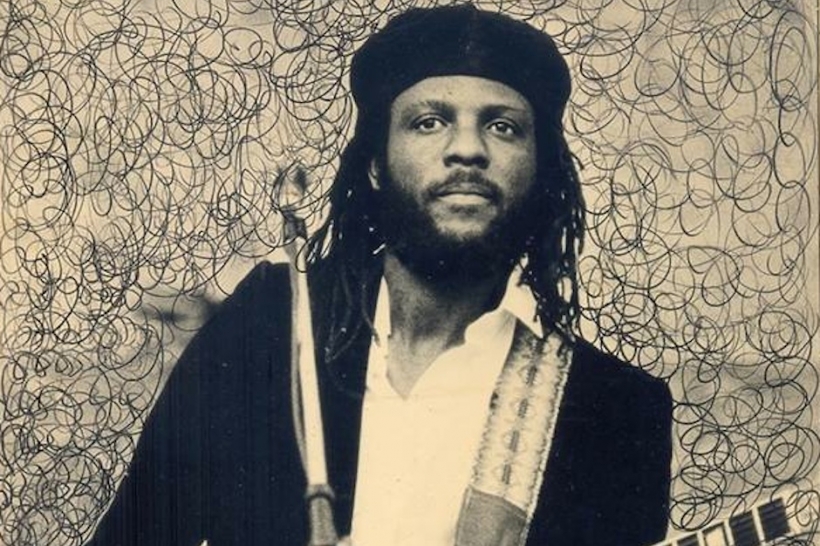
Peaked Cap: for people who don't dare to wear a beret


It was raining heavily that day in the Basque Country, and a large puddle formed in front of the village bar.

Miroslav Sekulic-Struja is a self-taught painter, illustrator, and novelist, whose rich and profound works seek to chronicle the underrepresented struggles of a generation lost to war.
He is best known for his Pelote trilogy, which tells the Dickensian story of orphans in wartime. In 2010, his graphic novel The Man Who Bought a Smile received the Young Talent Award from the Angoulême International Comics Festival.Jan Dolsma (76) from Meppel (Netherlands) became fascinated by cars as a child. He collected BSA and Moto Guzzi motorcycles, but when it comes to four-wheelers, nothing beats Citroën for him.

The oldest show horse in his stable dates from 1929: a C4. Bought in 1972. "It wasn't in very good condition. I had to do a tremendous amount of work on it. Nowadays, thanks to the internet, it usually doesn't take too much effort to get a part, but in those years, it wasn’t easy. It took a long search before I found the Bakelite horn I was looking for".

Due to his age, Dolsma, who ran an advertising agency during his working years, has thinned out his collection. A few years back, he sold his 2CV, a Citroën Traction and two Mercedes from 1960 and 1961. He still has a choice of three Citroëns to take for a drive: A C6, a C4 or a metallic green DS Palace 2300 from 1973, popularly known as a pike.
Photographer and filmmaker Danny Lyon inherited the spirit of rebellion and resistance from his mother, who regaled him with heroic tales of her brothers’ fearless crusade against the Tsar in the Russian and Bolshevik Revolutions of the early 20th century. As a young boy growing up in Queens, New York, Lyon would lie in bed at night and dream of seeing the world – never knowing his destiny was inextricably bound to history, art, and film.

The Bikeriders chronicled the Chicago Outlaws
Motorcycle Club between 1963 and 1987, a Hells Angels-style biker gang that
Lyon joined in 1966. In his hands the photography book took on diarist
qualities, the hand of the artist making itself felt as would a poet, painter,
or composer.
Now 82, Lyon charts his extraordinary journey in the new
book, This is My Life I’m Talking About, a picaresque memoir that
reveals his natural gifts for storytelling.
One black beret among the mourners of the 16th Street Baptist Church bombing in Birmingham.

On September 15, 1963, two and a half weeks after Martin Luther King’s “I Have a Dream” speech, a dynamite bomb set by members of the Ku Klux Klan erupted, just as twenty six children walked into the basement assembly room of the 16th Street Baptist Church in Birmingham, Alabama. Four girls, Addie Mae Collins, Denise McNair, Carole Robertson, and Cynthia Wesley, were killed, and 22 others were injured.

Photographs of the bombing’s aftermath–including the iconic image of blinded Sarah Jean Collins in her hospital bed–shocked the nation and helped give an emotional push for the passage of the Civil Rights Act in 1964.
Zoltan (Zvi) Kluger (1896 –1977) was an Austro-Hungarian born Israeli photographer. He is known as one of the most important photographers in Mandatory Palestine.

During World War I he served as an airborne photographer in
the Austro-Hungarian Aviation Troops. At the end of the 1920s he emigrated to
Berlin, where he worked as a press photographer.

In April 1933, with the rise of the Nazis to power, he arrived in Palestine as a tourist, and then received a British certificate to stay.
Kluger's prominent clients were the JNF and Keren Hayesod photography department, which sent Kluger to photograph economic enterprises and immigrants.

Zoltan Kluger died in Manhattan, New York in 1977. At his departure from Israel, he left behind a total of some 50,000 negatives.
Steffen Diemer (1966) is a German photographer whose work appeared in internationally renowned magazines such as Der Spiegel, National Geographic and The Guardian.
Until 2013, Diemer worked full-time on social documentary reportages in war zones and areas of crisis.
Suffering from the mentally exhausting work, Diemer entered a period of reflection in 2011.

During this time, he became an enthusiast of the wet collodion procedure; a fascination that lasts until today.
Lovers and Lollipops is a 1956 film directed and written by Morris Engel and Ruth Orkin. The film was photographed on location in and around New York City and tells the story of the romance of a widowed fashion model and an engineer, and how their relationship is affected by her daughter.
The film was the second of three feature films directed and written by Engel and Orkin, who were best known for the 1953 film Little Fugitive. Like that film and Weddings and Babies (1960), Lovers and Lollipops was a low-budget film shot in a naturalistic style uncommon during this era.
The character of Peggy was notable for its realism, showing her as bratty and self-centered, in contrast to the idealized portraits of children typical of 1950s films and TV. The film gained authenticity from its use of authentic New York City locations and a realistically meandering plotline, which made the film resemble real life more than polished movie acting.
Both Little Fugitive and Lovers and Lollipops were influential independent movies in that era, and influenced the French New Wave film movement and John Cassavetes.
Benjamin Bayard (1973) is an activist for fundamental freedoms in the information society and a French engineer. For fifteen years he was president of French Data Network, the oldest Internet service provider (ISP) still operating in France .
A campaigner for fundamental freedoms in the information society through net neutrality and free software, his positions have made him a noted personality on the French Internet.
Following yesterday's post on Hana-Rawhiti Maipi-Clarke: why are so many wearing (red) berets on the Hikoi?
![]() |
| Hana-Rawhiti Maipi-Clarke |
A hīkoi is a walk or march, and especially a protest march,
in New Zealand. The word comes from the Te Reo Māori language, and often
implies a long journey taking many days or weeks.
This month, a hīkoi opposing the Treaty Principles Bill
occurred. An estimated 42,000 people took part in the hīkoi, taking nine days
to reach the parliament grounds of Wellington, with some groups beginning in
the Far North and Bluff (in the far South). The Māori Queen Ngā Wai Hono i te
Pō joined the protests in Wellington. Coinciding with the march was an online
petition opposing the bill that received over 200,000 signatures.
Northland teenager Chelsea Reti marched with the Hīkoi mō Te
Tiriti from the beginning and before reaching Wellington, her mum decided it
was the right time to send down a red beret.
"When we choose to put something on our head where we
know it is going to be seen there is a significance behind it and there was
significance behind why I wore a red beret," she said.
![]() |
| Chelsea Reti |
Countless other mostly young wāhine (women) donned a red beret for
the march. It's a pōtae (hat) steeped in history and symbolism for the Māori
rights movement and other freedom movements overseas stretching back decades.
Chelsea says her mum remembered berets worn by Māori activists in the past. She also took inspiration from 22-year-old Te Pāti Māori MP Hana-Rāwhiti Maipi-Clarke, who often wears berets on significant occasions. Maipi-Clarke's great-aunt Hana Te Hemara wore a beret when she brought a te reo Māori language petition to Parliament in 1972.
Dr Bobby Luke Campbell, a senior fashion lecturer at
Auckland University of Technology, said the Polynesian Panthers popularised the
beret as a freedom symbol in New Zealand in the mid-1970s, spurred by protests
against the Dawn Raids. While hats are a Western symbol, they have been widely
adopted and reimagined as a symbol for Māori.
You'd like your own beret, but don't know where to go for the very best?
The largest range of berets and related hats on the planet! Easy ordering 24/7, shipping within 24 hours; click here.